Somewhere in your business right now, someone is pasting a client document into a public AI chatbot because it’s the fastest way to get a summary. They aren’t being reckless. They’re being productive. The tools are brilliant, and asking people not to use them is like asking them not to use a calculator.
The trouble is that the data in that document is the whole problem. Client files, contracts, personnel records, designs, pricing, anything under NDA or export control: none of it should be leaving the business for a service whose terms you haven’t read, hosted somewhere you can’t point to on a map.
So most businesses end up in one of two places. Either people use the public tools quietly and nobody asks too many questions, or the business bans them outright and gives up the benefit. Neither is a strategy.
There’s a third option
Over the last couple of years, open-source AI models have caught up with the commercial ones for most everyday business work. Model families such as Llama, Mistral, Qwen, Gemma and DeepSeek can draft, summarise, classify, extract, answer questions and help with code well enough that most people can’t tell the difference on routine tasks.
The important bit is that open-weight models can be downloaded and run on hardware you own or rent. Nothing has to go to a third party. The model runs inside a boundary you control, the data stays inside it, and you can tell your customers, your auditors and your insurers exactly where everything lives.
That’s what we mean by private AI. Not a less capable AI. The same capability, in a place you trust.
Why “just run it on a server” isn’t enough
Here’s where a lot of early private AI projects go wrong. Someone downloads a model, gets it running on a box under a desk, and declares the problem solved. It isn’t. Running a model on your own hardware is not, on its own, secure. It has simply moved the risk from a supplier you don’t control to a machine nobody is looking after.
The value is in what gets wrapped around the model:
Who can use it. Single sign-on through your existing identity provider, with access to each model and dataset controlled by role. When someone leaves, their AI access leaves with them.
What it’s allowed to see. When the model answers questions about your own documents, it should only draw on material the person asking is already allowed to read. Permissions from SharePoint, file shares and document systems need to carry through, and answers should cite their sources.
What goes in and out. Sensitive-data detection and data loss prevention on prompts and responses, so a model can’t be used to exfiltrate what the rest of your security stack is protecting.
A record. Every prompt and response logged to your retention rules. “Who asked what, and what did it say” becomes a question you can answer.
The plumbing. Network isolation, encryption in transit and at rest, patching, monitoring, backups and capacity management. The unglamorous work that turns a model into a service.
Get those right and private AI becomes something you can roll out to the whole business rather than something a few technical people experiment with.
Where should it live?
There isn’t one right answer, which is why we don’t give one. Three options, each right for different situations:
Your own cloud. The platform runs inside your Azure or AWS subscription on the provider’s GPU capacity, under your governance and billed to your account. A good fit if you’re already cloud-first and want the boundary to be your existing tenancy.
A UK-hosted private cloud. We run the platform on our own infrastructure, under contract, for organisations that want the certainty of a known data boundary without owning or operating any of it.
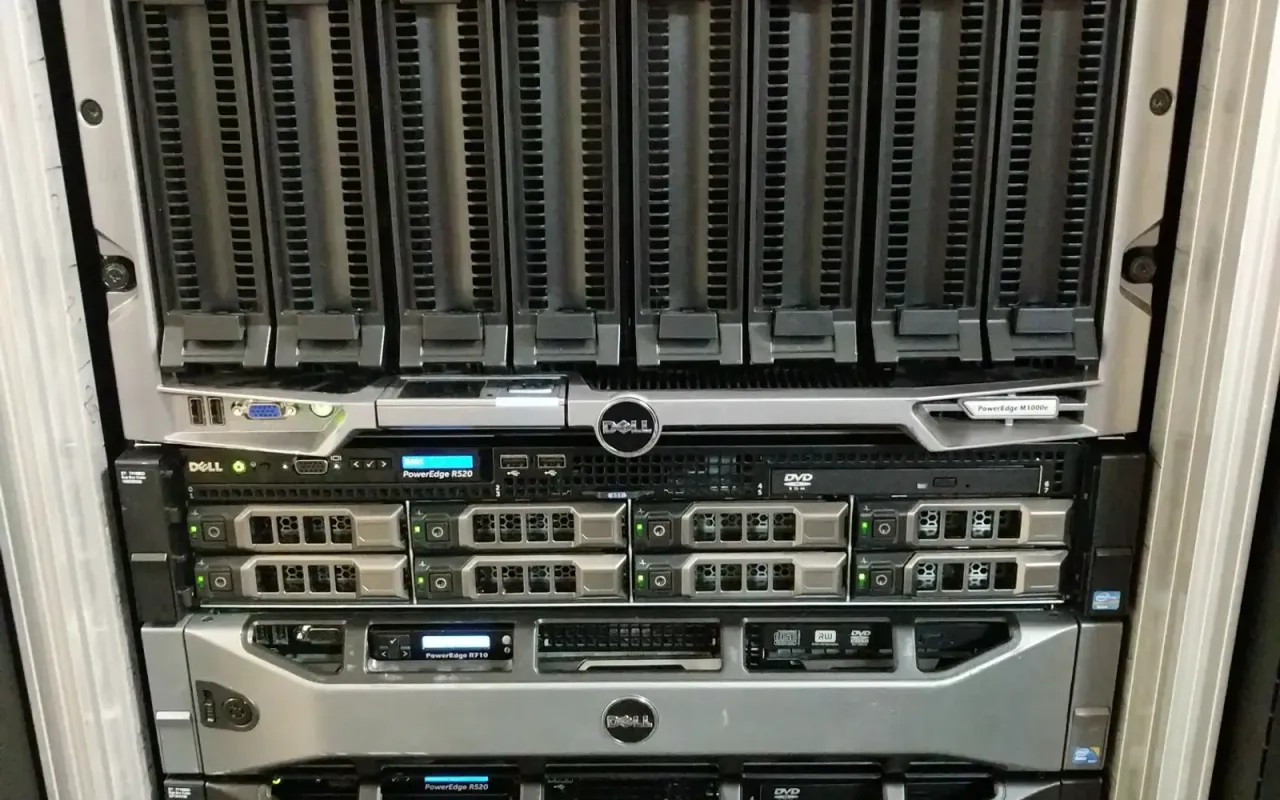
Your premises or a colocation data centre. Dedicated GPU hardware in your own server room or a UK colocation facility. This is the answer when data genuinely cannot leave your control, when contracts or export rules demand it, or when sustained usage makes owning the hardware cheaper than renting it.
The honest comparison between those three, with real numbers, is part of any engagement. Sometimes the answer is also “you don’t need this at all”: plenty of AI work is fine on a public service, and private hosting is for the work that isn’t.
What it looks like day to day
For most people it looks like a chat assistant that signs in with their work account, knows about the company’s own documents, and can be trusted with the contract they’re working on. For developers it looks like a standard API endpoint their applications and automations can call. For the IT team it looks like a service that someone else monitors, patches and upgrades.
And for the board it looks like a straight answer to the question “where does our data go when staff use AI?” The answer is: nowhere.
Making it happen
We’ve launched Private AI Hosting as a fully managed service: the model, the security layer and the operations, hosted in whichever of the three places fits your business. It sits alongside our AI gap analysis, which works out where AI will actually pay off for you, and our AI security audit, which can assess any AI deployment independently, including ours.
If your people are already using AI on data they shouldn’t be, or you’ve banned it and you’re feeling the cost of that, get in touch. The first conversation is about your data and your risks, not about hardware.